How Mathematical Puzzles Can Improve Analytical Skills

The Hidden Benefits of Engaging with Math Puzzles
Mathematical puzzles serve as an invaluable resource not only for entertainment but also as invigorating exercises that can significantly enhance analytical skills. In Nigeria, where educational institutions are increasingly prioritizing STEM (Science, Technology, Engineering, and Mathematics) disciplines, the role of these puzzles has never been more crucial. The mental gymnastics required to solve math puzzles facilitate the development of essential skills that are applicable in academic and everyday contexts.
One of the most critical benefits of engaging with mathematical puzzles is how they enhance logical reasoning. Solving puzzles often requires individuals to identify patterns and structures, similar to the reasoning needed in mathematics and science. For example, students may encounter a puzzle that asks them to find the missing number in a sequence. Through regular practice, they learn to recognize patterns, enabling them to approach similar problems with confidence and discernment.
Additionally, math puzzles boost problem-solving skills by inviting solvers to explore multiple methods of arriving at a solution. Consider a classic puzzle like the Rubik’s Cube. This popular brain teaser doesn’t merely ask for one solution; instead, it encourages explorers to devise varied strategies for solving it, enhancing creativity in problem-solving. In classrooms across Nigeria, teachers are adapting such puzzles to teach concepts of geometry and spatial reasoning effectively.
Another crucial aspect of engaging with challenging puzzles is the cultivation of persistence. Many math puzzles can be frustratingly difficult, often pushing solvers to their limits. This trial-and-error process is instrumental in developing resilience, teaching students that with perseverance, complex problems can be cracked—an essential lesson for academic challenges and life in general. Events like math competitions have sprung up in cities such as Lagos, emphasizing this resilience and making learning both fun and competitive.
Mathematical puzzles are inclusive, providing learning opportunities for children and adults alike. They can be used in a variety of settings, whether in a structured school environment or at home during family game nights. The adaptability of these puzzles makes them an excellent educational tool for stimulating young minds across Nigeria’s diverse population.
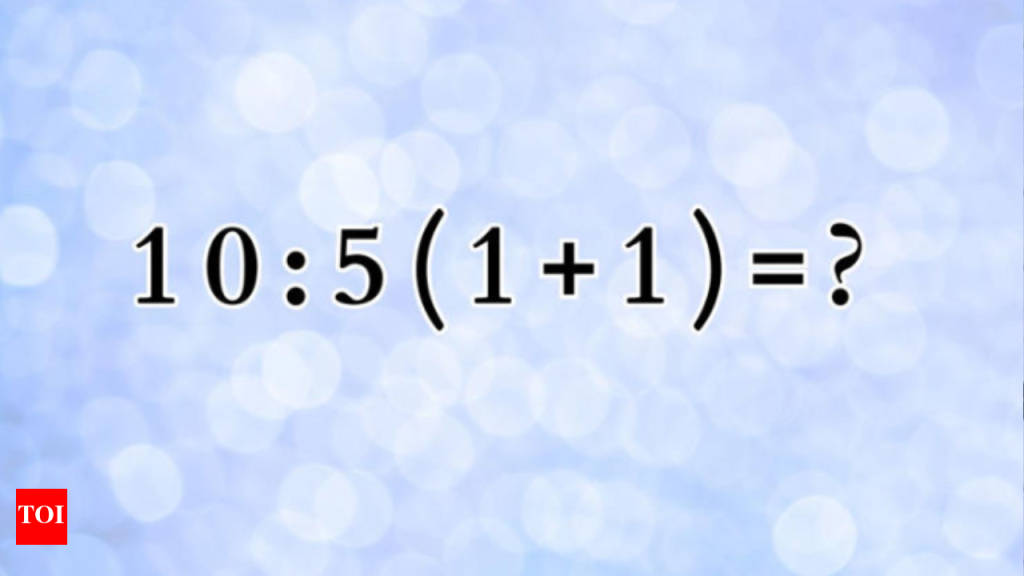
As we delve deeper into the multifaceted world of mathematical puzzles, it becomes evident that they are not just tools for academic learning. Rather, they pave the way for developing crucial cognitive skills that have far-reaching implications, both in educational contexts and daily life. By exploring this fascinating domain, individuals can unlock new pathways to thinking, creativity, and ultimately success.
CHECK OUT: Click here to explore more
Unlocking Cognitive Potential Through Math Puzzles
As we consider the profound impact of mathematical puzzles on analytical skills, we must highlight their ability to encourage a systematic approach to solving problems. The discipline of mathematics often stresses the importance of methodical reasoning, a quality that is indispensable in both academic and real-world scenarios. For instance, solving puzzles such as Sudoku not only sharpens numerical skills but also promotes strategic thinking. This engagement fosters an awareness that is vital for tackling complex issues, whether in mathematics or everyday life, ensuring that learners are well-prepared for future challenges.
Furthermore, mathematical puzzles can greatly enhance one’s critical thinking abilities. When confronted with intricate problems, individuals must break down the information and assess various angles before reaching logical conclusions. This process is akin to the analytical approaches used in scientific research. As students in Nigeria navigate *math problem-solving challenges*, methods such as brainstorming and hypothesizing become second nature, as they are consistently required to evaluate multiple factors before arriving at the best solution.
The continuous engagement with mathematical puzzles not only reinforces knowledge of mathematical concepts but also cultivates a deep-seated curiosity. It’s this thirst for understanding that drives individuals to explore beyond prescribed syllabus topics. When learners encounter puzzles that integrate real-life contexts, such as financial budgeting challenges or resource allocation models, they gain valuable insights into how mathematics permeates various aspects of our lives. This approach not only enriches their academic experience but also instills practical skills that can significantly benefit their future careers.
Examples of Mathematical Puzzles that Enhance Skills
To illustrate the diverse range of mathematical puzzles that can boost analytical skills, consider the following examples:
- Logic Puzzles: These require individuals to deduce information from given clues, honing their ability to think critically and make connections.
- Number Sequences: Finding patterns in numerical sequences sharpens pattern recognition and algebraic thinking.
- Riddles: Engaging with linguistic math riddles can enhance verbal reasoning while still focusing on numeric logic.
- Geometric Challenges: Solving puzzles involving shapes and sizes improves spatial awareness and geometric reasoning.
As we explore these examples, it’s essential to recognize that the accessibility of mathematical puzzles makes them suitable for people of all ages. In schools across Nigeria, teachers are increasingly implementing puzzles into their lesson plans to engage students actively. Whether it’s through classroom competitions or interactive workshops, the integration of these puzzles presents an innovative avenue for enhancing analytical capabilities.
Ultimately, the benefits of engaging with mathematical puzzles extend far beyond the classroom. They prepare students not only for academic success but for life’s myriad challenges, encouraging critical thought, creativity, and resilience that are pivotal in navigating the complexities of the modern world.
Unlocking Analytical Skills Through Puzzles
Mathematical puzzles are not just entertaining challenges; they serve as powerful tools for enhancing analytical thinking. Engaging with these puzzles fosters critical thought processes, enabling individuals to approach problems systematically. By exposing learners to varied formats—such as logic problems, number games, and geometry challenges—these brain teasers develop the ability to dissect complex scenarios and analyze them from multiple angles.
Furthermore, regular interaction with mathematical puzzles improves one’s capacity to recognize patterns, a key aspect of analytical skills. These puzzles often contain hidden structures or sequences that require keen observation and creativity to unravel. This enhances not only mathematical abilities but also promotes a mindset geared towards problem-solving across diverse disciplines.
As learners strive to find solutions, they naturally cultivate resilience and patience, qualities that are essential for effective analysis. Additionally, puzzles can be turned into group activities, fostering a collaborative learning environment that enhances communication skills. Participants can share strategies, discuss various approaches, and collectively work toward a solution, thus enriching their analytical abilities.
| Advantage | Impact on Analytical Skills |
|---|---|
| Enhanced Critical Thinking | Encourages systematic problem-solving approaches. |
| Pattern Recognition | Improves ability to identify trends and structures in data. |
| Team Collaboration | Fosters communication skills and diverse problem-solving strategies. |
| Boosted Resilience | Cultivates patience and perseverance in challenging situations. |
The rich landscape of mathematical puzzles invites individuals of all ages to delve deeper into the world of logic and reasoning. By becoming familiar with these challenges, learners not only enhance their own analytical skills but also equip themselves with valuable tools necessary to navigate studies and professional undertakings effectively.
LEARN MORE: This related article may interest you
The Impact of Collaborative Problem-Solving on Analytical Development
An often-overlooked aspect of engaging with mathematical puzzles lies in the collaborative nature of solving these challenges. When individuals come together to work on puzzles, they not only share different perspectives but also cultivate a rich environment of learning and collective reasoning. This interaction fosters communication skills, allowing participants to articulate their thought processes and debate various approaches to a given problem. For students in Nigeria, this collaborative environment can replicate real-world experiences where teamwork and mutual understanding are crucial components of any successful endeavor.
The experience of tackling mathematical puzzles in groups can serve as a microcosm of successful analytical practices. For example, working on a challenging logic puzzle as a team can mirror the dynamics found in businesses where professionals must brainstorm solutions to complex dilemmas. Such group endeavors not only reinforce analytical skills but also enhance interpersonal abilities, which are tremendously valuable in both academic and professional contexts.
Real-World Applications of Analytical Thinking
Mathematical puzzles provide an ideal platform for bridging theoretical knowledge with practical application. In Nigeria, many industries are beginning to recognize the importance of analytical skills in decision-making processes. For instance, in sectors such as agriculture, finance, and technology, mathematical reasoning allows professionals to make data-driven decisions. Engaging with puzzles fosters an understanding of how to interpret and analyze data effectively, enabling individuals to devise solutions that could improve productivity and resource management.
Imagine a group of students who apply their learning from math puzzles to a project on sustainable agricultural practices. By using analytical skills honed through problem-solving, they could evaluate factors such as crop yields, market prices, and resource allocation. This not only deepens their knowledge but also provides a meaningful context for the mathematical principles they learn. Such practical experiences can ignite a passion for finding innovative solutions to some of Nigeria’s most pressing challenges, such as food security and economic development.
Moreover, engaging with mathematical puzzles cultivates a mindset geared towards adaptability and creativity. As puzzles often present unexpected twists and require unconventional thinking, learners develop the resilience to approach problems without falling into rigid thought patterns. This quality is essential in an era where rapid changes and uncertainties dominate the landscape. Students that embrace such intellectual flexibility are better prepared to navigate the multifaceted nature of modern society.
- Case Studies: Analyze real-life scenarios where mathematical reasoning has solved complex logistical issues in businesses.
- Simulation Projects: Create simulations based on puzzles to understand numerical trends and their implications in various fields.
- Hackathons: Encourage participation in contests that blend coding with mathematical challenges, enhancing technology skills alongside analytical prowess.
Through the cultivation of a problem-solving culture, students in Nigeria can harness the power of mathematical puzzles to build not only their analytical skills but also their confidence in applying these skills across various domains of life. This approach paves the way for a generation of thinkers who can confront the challenges of today while preparing for the uncertainties of tomorrow.
RECOMMENDED: Check out this similar article
Conclusion: Embracing the Power of Mathematical Puzzles
In summary, the engagement with mathematical puzzles emerges as a powerful tool for fostering and enhancing analytical skills across various demographics, particularly students in Nigeria. The collaborative nature of solving these puzzles not only nurtures critical thinking but also promotes teamwork and communication—essential skills in today’s interconnected world. As learners dissect intricate problems, they sharpen their ability to interpret data, make informed decisions, and approach challenges with creativity.
Furthermore, the real-world applications of these skills can’t be overstated. Industries ranging from agriculture to technology increasingly demand professionals who possess strong analytical competencies. By tackling mathematical puzzles, students are not merely playing games; they are actively preparing themselves for future scenarios where data-driven decision-making is pivotal to success. This method of learning not only deepens their understanding of mathematical principles but instills a passion for innovation and problem-solving.
Ultimately, as national and global challenges evolve, so too must the approach to education. Embracing mathematical puzzles in the classroom offers a transformative pathway for students, allowing them to build confidence and resilience. As Nigeria works towards sustainable growth and development, equipping the younger generation with robust analytical skills through engaging and collaborative learning experiences will prove vital. The journey of problem-solving through puzzles is an adventure worth embarking upon, setting the stage for a future where analytical thinking is at the forefront of progress.