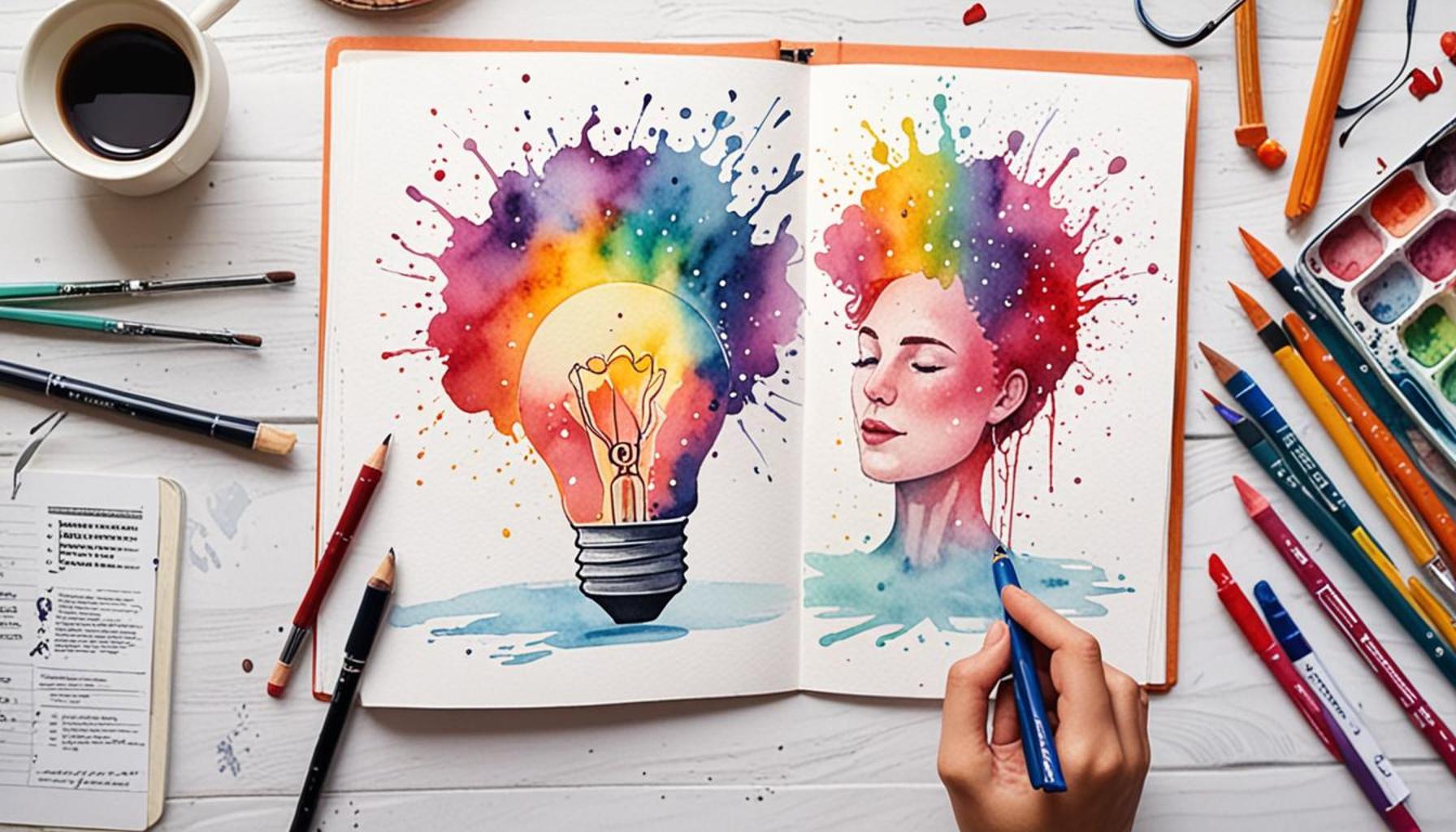
How Positive Self-Talk Can Contribute to Creativity and Innovation

The Impact of Inner Dialogue on Creativity and Innovation
In a fast-paced world where creativity fuels progress, the way we communicate with ourselves plays a pivotal role in our innovative capabilities. Positive self-talk acts as a catalyst, transforming our thought patterns into pathways for new ideas and solutions. The implications of this inner dialogue are profound and far-reaching.
Consider the following benefits of positive self-talk:
- Boosts Confidence: Encouraging words can enhance self-esteem, making individuals more willing to take risks. For instance, an entrepreneur who replaces negative thoughts of “I might fail” with “I have the skills to succeed” is more likely to approach challenges with vigor, leading to breakthrough innovations.
- Enhances Problem-Solving: A supportive mindset enables better analysis and exploration of complex issues. Research published in the Journal of Applied Psychology found that individuals who practice positive self-talk tend to approach problems with a more open and analytical mindset, often leading them to find creative solutions that might have otherwise gone unnoticed.
- Stimulates Creativity: Positive affirmations can open the mind to new concepts and creative solutions. For example, artists and writers often use affirmations like “I am capable of great creativity” to push the boundaries of their imagination and explore novel ideas without the fear of judgment.
Research indicates that individuals who engage in optimistic self-talk are more likely to generate innovative ideas. By reframing negative thoughts into constructive ones, creative individuals can increase their productivity and adaptability. According to a study by the American Psychological Association, self-affirmation can lead to an increase in cognitive flexibility, allowing individuals to reassess problems and come up with multiple solutions.
Diving deeper into how you can harness this powerful tool for your own personal and professional growth, it is crucial to recognize that the practice of positive self-talk is not merely about expressing cheerful sentiments; it is about fostering a deep belief in one’s abilities. Techniques such as journaling positive affirmations, practice visualization, and even engaging in mindfulness exercises can help you internalize these empowering messages.
In the following sections, we will explore practical techniques to cultivate positive self-talk and examine its impact on creative innovation. Each strategy could be the key to unlocking your full potential, whether in your career or personal endeavors. By understanding and implementing these practices, you equip yourself with the necessary tools to navigate challenges and seize opportunities with confidence and creativity.
DISCOVER MORE: Click here to unlock your potential
Harnessing the Power of Positive Self-Talk for Creative Growth
Understanding the mechanisms behind positive self-talk is essential for anyone looking to enhance their creativity and foster innovation. Self-talk, the internal dialogue we maintain throughout the day, serves as a powerful influence on our brain’s perception, response, and overall output. In a landscape where innovation is critical, recognizing how our thoughts shape our creative capacities can lead to surprising breakthroughs.
This internal conversation can transform our approach to challenges and ideas. Here are several ways that positive self-talk contributes to creativity:
- Encourages Risk-Taking: Creativity often involves stepping outside the comfort zone. When individuals support themselves with positive affirmations, they are more likely to pursue unconventional ideas. A study from the University of Chicago found that individuals who believe in their creative potential are more inclined to take risks and test out novel solutions, a critical component in innovation.
- Reduces Mental Blocks: Negative thinking can lead to analysis paralysis, where one becomes stuck due to fear of failure or inadequacy. Positive self-talk interrupts this cycle by offering a reassuring narrative, allowing individuals to push past these mental barriers. For instance, telling oneself, “Mistakes are a part of the process” can free creative energy and enable individuals to explore uncharted territories without the fear of failure.
- Promotes a Growth Mindset: Carol Dweck’s research on growth mindset emphasizes that individuals who view their abilities as improvable are more likely to embrace challenges. Positive self-talk nurtures this mindset. By stating things like “I am capable of learning and growing,” individuals reinforce their belief in adaptability, which is essential for ongoing creativity and innovation.
Additionally, self-talk activates a cascade of positive neurological responses. Neuroplasticity—the brain’s ability to reorganize itself—can be influenced significantly by our self-talk. Studies have shown that when positive affirmations are practiced consistently, they can lead to increased dopamine release, enhancing mood and motivation. This increased positivity forms a fertile ground for creative thought processes, fostering an environment where innovative ideas can flourish.
As we delve further into the techniques that can cultivate positive self-talk, it is essential to understand that the transition to a more optimistic inner dialogue often requires consistent practice. Techniques such as daily affirmations, where one states personal strengths and aspirations, can reinforce a constructive inner voice. Moreover, engaging in creative visualization—imagining oneself achieving success in creative endeavors—can also support this process and enhance the likelihood of realizing those aspirations.
In our next sections, we will unveil specific strategies for integrating positive self-talk into daily life to stimulate creativity and innovation further. By actively working on this internal dialogue, individuals can unlock a wellspring of potential, paving the way for substantial personal and professional achievements.
Positive self-talk is more than just a motivational tool; it’s a catalyst for unleashing creativity and fostering innovation. By shifting the internal dialogue from negative to affirming, individuals can enhance their cognitive flexibility, which is crucial for creative thinking. This shift encourages expansive ideas and novel solutions, directly impacting problem-solving abilities.
Research has shown that when individuals engage in positive self-talk, they tap into a reservoir of potential that might otherwise remain dormant. This practice pushes aside self-doubt and fosters a mindset conducive to exploration and experimentation. When facing challenges, positive affirmations not only improve resilience but also empower individuals to view setbacks as opportunities for growth.
The impact of positive self-talk extends beyond individual creativity. Teams and organizations that promote a culture of positivity often experience enhanced collaborative efforts. Members feel safer expressing innovative ideas, opening the floor for brainstorming sessions that can lead to groundbreaking projects and initiatives. Moreover, innovation thrives in environments where individuals feel valued and inspired, thus emphasizing the synergy between positive self-talk and group dynamics.
Incorporating techniques such as visualization and affirmations into daily routines can unlock their full potential. These practices not only serve as reminders of individual capabilities but also foster a supportive atmosphere, driving both personal growth and collective innovation. As you embark on exploring positive self-talk, consider observing its profound influence on your creative process.
| Advantages | Impact on Creativity & Innovation |
|---|---|
| Enhanced Problem Solving | Promotes a creative approach to facing challenges. |
| Increased Resilience | Transforms setbacks into learning opportunities, fueling innovation. |
| Fostering Collaboration | Encourages open expression of ideas in team settings. |
By recognizing and harnessing the power of positive self-talk, both individuals and organizations can cultivate a culture of creativity and innovation, leading to success across various endeavors.
DISCOVER MORE: Click here to learn how to inspire a growth mindset in kids
Nurturing Creativity Through Daily Practices of Positive Self-Talk
The transformation induced by positive self-talk is not just a fleeting phenomenon; it is a process that, through daily practice, can amplify creativity and spur innovation in both personal and professional realms. To harness this transformative potential, individuals can adopt several practical techniques that encourage a sustained shift towards a constructive inner dialogue.
One effective method is the practice of gratitude journaling, where individuals jot down things they appreciate about themselves, their experiences, and their environment. This practice can divert attention from negative self-perceptions and cultivate an atmosphere that supports creative thought. Research suggests that expressing gratitude not only enhances emotional well-being but also opens the mind to greater creative possibilities. A team from the University of Pennsylvania found that those who regularly documented their daily gratitude felt more motivated and open to pursuing new ideas.
Moreover, mindfulness meditation complements positive self-talk by fostering emotional regulation and present-moment awareness. Engaging in mindfulness allows individuals to observe intrusive negative thoughts without judgment and to replace them with affirming statements. According to a study published in the journal Psychological Science, mindfulness practice is linked to higher levels of creativity as it encourages divergent thinking—a key trait for innovative problem-solving.
Creating an Affirmation Routine
To solidify the impact of positive self-talk, establishing a structured affirmation routine can have profound effects. This involves choosing specific, motivating phrases that resonate personally and repeating them regularly. Statements such as “I am creative,” “Every idea I explore has value,” or “I can overcome challenges with innovative solutions” can serve as fuel for creative endeavors. A 2017 study from the University of California, Irvine, demonstrated that individuals who engaged in positive affirmations before brainstorming sessions produced a wider array of ideas and showed increased confidence in their innovative capabilities.
Additionally, collaboration plays a significant role in enhancing self-talk dynamics. Engaging in dialogues with peers or creatives can lead to positive reinforcement, where supportive feedback further uplifts self-belief. The synergy created in brainstorming sessions nurtures an environment where elevated self-talk proliferates. As per a report from the American Psychological Association, collaborative settings are known to boost creativity by about 15%, primarily through enhanced positive self-reinforcement among team members.
Furthermore, drawing inspiration from successful innovators can spark a change in one’s narrative. By studying the stories of industry leaders—like Steve Jobs or Oprah Winfrey—individuals can reassess their challenges and inherent potential. Understanding how these figures overcame obstacles through positive self-affirmation can illuminate paths for others. The journey of creative minds often includes intrinsic encouragement, emphasizing the importance of self-talk in perspective shifts and perseverance.
Incorporating self-compassion into one’s self-talk repertoire is equally crucial. Research shows that being kind to oneself leads to greater creativity. Instead of criticizing oneself for perceived shortcomings or failures, individuals can replace such negativity with compassionate dialogue. According to a 2021 study published in the journal Creativity Research Journal, self-compassionate individuals reported higher creative self-efficacy, thus further proving that our internal narrative indeed shapes our creative pursuits.
Engaging with these strategies can foster an environment resonant with creativity and innovation. As individuals commit to consciously cultivating a positive self-dialogue, they may discover untapped reservoirs of imagination, ready to materialize into transformative ideas.
DISCOVER MORE: Click here to learn how positive affirmations can ease your stress
Conclusion
In conclusion, the influence of positive self-talk on creativity and innovation is undeniable. By fostering a constructive internal dialogue, individuals can unlock new pathways for creative expression and innovative thinking. As explored in this article, practices such as gratitude journaling, mindfulness meditation, and structured affirmations not only enhance self-esteem but also encourage an expansive mindset that is crucial for generating innovative ideas.
The link between collaboration and elevated self-talk further emphasizes the community’s role in nurturing creativity. Collectively sharing insights and support can amplify motivation and yield a more dynamic exchange of ideas. This synergistic effect can transform team dynamics into powerful engines of innovation, fostering environments where creativity thrives.
Moreover, the incorporation of self-compassion can be a game changer. By treating oneself with kindness and understanding, individuals can mitigate the negative impacts of self-doubt, paving the way for higher creative self-efficacy and exploration of new concepts. This approach not only enriches personal growth but also businesses and communities striving for inventive solutions.
As we venture into an increasingly competitive landscape, embracing positive self-talk may emerge as an essential tool not just for professional growth but for overall life satisfaction. By committing to these daily practices, individuals can ignite their imaginative potential and facilitate transformative ideas that shape the future. The journey of creativity begins with how we speak to ourselves—let it be a journey filled with encouragement and possibility.