The Role of Puzzles in the Formation of Children’s Critical Thinking
The Importance of Puzzles in Child Development
In a world increasingly driven by rapid advancements and complex challenges, developing critical thinking skills in children has become essential. This is where puzzles come into play, proving to be more than just a fun pastime. They serve as powerful tools that can enchant young minds while nurturing essential cognitive abilities. Engaging with puzzles not only captivates children but also enriches their mental capabilities, making the experience both enjoyable and educational.
Enhancing Problem-Solving Skills
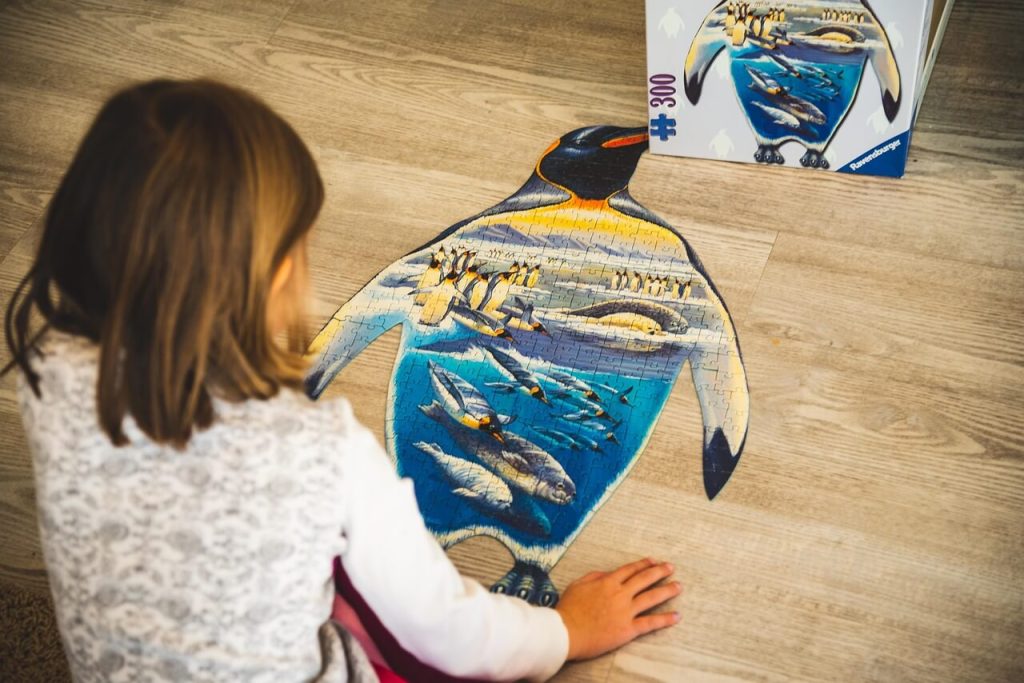
One of the most significant benefits of puzzles is their impact on problem-solving skills. When children tackle a puzzle, they are faced with different challenges that require them to think strategically and logically. For instance, putting together a jigsaw puzzle requires them to recognize patterns and visualize the final picture. Similarly, brain teasers and logic puzzles prompt them to devise solutions creatively. This cognitive engagement bolsters their ability to navigate complex issues they may encounter in academic settings and their daily lives.
Fostering Teamwork and Communication
Puzzles also serve as an excellent avenue for children to develop teamwork and communication skills. Many puzzles are designed for groups, encouraging collaboration among peers. In a classroom or during family game night, children learn to express their ideas, negotiate solutions, and support one another in achieving a common goal. For example, a group of friends solving a large jigsaw puzzle must communicate effectively to determine which pieces fit where, thus honing their collaborative skills.
Cultivating Patience and Perseverance
Another vital aspect of puzzle-solving is the cultivation of patience and perseverance. Working through challenging puzzles teaches children to approach problems methodically and encourages them to remain focused even when faced with difficulties. This experience fosters their resilience—a crucial skill in both academic and personal contexts. For instance, a child who struggles to solve a challenging Sudoku may learn not only to persist but also to embrace the process of trial and error as part of the learning journey.
A New Educational Landscape in Nigeria
As children engage with puzzles, they not only entertain themselves but also develop critical analytical skills that will benefit them in academic settings and beyond. In Nigeria, where educational strategies are evolving to incorporate more hands-on learning experiences, the integration of puzzles into the curriculum can be pivotal. By incorporating such activities, teachers can enhance critical thinking and problem-solving skills among students, preparing them for future challenges.
Understanding the role of puzzles sheds light on how simple play can lead to profound educational outcomes. Through this exploration, we observe that puzzles offer a multifaceted approach to learning, allowing children to sharpen their mental faculties while having fun. This insight invites further investigation into innovative educational practices that can harness the engaging power of puzzles to foster critical thinking and personal growth in children growing up in today’s dynamic society.
SEE ALSO: Click here to read another article
Unlocking Cognitive Potential Through Puzzles
Puzzles have gained recognition as a valuable resource for enhancing children’s critical thinking skills. Their multifaceted nature allows children to approach challenges from various angles, sharpening their analytical abilities in the process. Engaging with puzzles provides a practical application of theoretical knowledge, bridging the gap between play and learning. This intersection is particularly relevant in Nigeria, where the push towards interactive and engaging educational methods is becoming increasingly prominent.
Recognizing Patterns and Developing Logic
At the core of puzzle-solving lies the ability to recognize patterns and develop a logical framework for thought. Children encounter different types of puzzles, each designed to stimulate cognitive flexibility. For example, puzzles like crossword or number games challenge them to connect dots, think outside the box, and identify relationships between various elements. These activities not only encourage children to use logic but also promote an understanding of sequencing and the cause-and-effect relationship, essential components of critical thinking.
The Benefits of Varied Puzzle Types
Puzzles come in various forms, each beneficial for fostering different cognitive skills:
- Jigsaw puzzles: These improve spatial awareness as children learn to piece together shapes and colors.
- Sudoku and number puzzles: Such activities reinforce numerical reasoning and attention to detail.
- Logic puzzles: These encourage deductive reasoning and the evaluation of multiple solutions.
- Word searches and crosswords: These enhance vocabulary and comprehension skills.
By diversifying the types of puzzles introduced to children, parents and educators can tailor learning experiences to meet specific developmental needs. This customization ensures that each child has the opportunity to engage with puzzles that challenge their existing skill sets, thereby promoting growth in critical thinking.
Encouraging Independent and Collaborative Exploration
Puzzles not only promote independent thinking but also ignite collaboration among peers or family members in Nigeria’s communal culture. When children work together to solve challenges, they engage in a collaborative learning experience that accentuates the importance of collective intelligence. This interaction fosters a sense of community while developing crucial social skills such as negotiation, sharing, and joint problem-solving. Through dialogue and shared reflection on strategies, children refine their thinking processes as they navigate the opinions and ideas of others.
In a country where community forms the backbone of childhood development, the role of puzzles in enabling social learning cannot be overstated. Children not only enhance their cognitive skills but also develop the ability to collaborate, which prepares them for interactions beyond the classroom walls. Navigating the dynamics of teamwork through puzzles is an experience that extends into their adult lives, enabling them to face challenges with confidence and creativity.
As we delve deeper into the intricacies of puzzle-solving, it becomes evident that these engaging activities hold the key to unlocking children’s critical thinking capabilities while providing essential life lessons. Understanding this relationship encourages further integration of puzzles into Nigerian educational practices, paving the way for an intellectually stimulating future.
The Importance of Puzzles in Developing Cognitive Skills
Puzzles serve as more than just a source of entertainment; they are instrumental in nurturing children’s critical thinking skills. Through engaging with various types of puzzles, children can enhance their problem-solving capabilities, logical reasoning, and spatial awareness. Research indicates that when children tackle puzzles, they are not only recognizing patterns but also learning to think critically about the relationships between different components. For instance, jigsaw puzzles require children to organize pieces, discern shapes, and match colors, which promotes visual-spatial reasoning. Similarly, crossword puzzles and word searches foster language skills and cognitive flexibility. By analyzing clues and strategizing their next moves, children experience firsthand the process of evaluating options, which is key to critical thinking.Furthermore, collaborative puzzle-solving can enhance social skills and teamwork, allowing children to communicate their reasoning and share diverse perspectives. This collaborative aspect builds not only their cognitive abilities but also their emotional intelligence, as they learn to negotiate and appreciate varying viewpoints. To illustrate, studies have shown that children who frequently engage with puzzles perform better in mathematics and reading comprehension, indicating a direct correlation between puzzle play and academic success. As parents and educators recognize these benefits, there is a growing interest in incorporating puzzles into learning environments, thereby enriching the educational process and fostering a generation of critical thinkers. Consider the potential of providing young minds with tools that sharpen their analytical abilities while also being enjoyable. The enduring appeal of puzzles lies in their multifaceted benefits, making them a powerful educational resource.
| Category | Advantages |
|---|---|
| Cognitive Development | Enhances problem-solving and reasoning abilities. |
| Social Skills | Promotes teamwork and communication through collaborative play. |
| Academic Success | Improves performance in math and reading comprehension. |
| Engagement | Provides an enjoyable way to develop critical thinking skills. |
Incorporating puzzles into children’s daily activities can significantly enhance their critical thinking capabilities, positioning them for future success both academically and socially.
CHECK OUT: Click here to explore more
Fostering Creativity and Problem-Solving Skills Through Puzzles
Puzzles are not just about fitting pieces together or answering questions; they are gateways to fostering creativity and honing problem-solving skills in children. In a world that increasingly prioritizes innovative thinking, engaging with puzzles equips young learners with the mental agility necessary to approach problems with creativity and resilience. In Nigerian educational contexts where traditional learning methods are being complemented by progressive approaches, the inclusion of puzzles as learning tools is proving to be transformative.
Encouraging Experimentation and Risk-Taking
One of the hallmark benefits of puzzle-solving is the environment it creates for experimentation. Children learn to explore various approaches to find solutions, fostering a mindset where trying different strategies is not only encouraged but essential. For instance, a child faced with a complex jigsaw puzzle might initially struggle but, through trial and error, begin to understand how different shapes fit together. This process teaches children that failure is not the end but rather a stepping stone to success—an important lesson in critical thinking.
In particular, puzzles instill a sense of risk-taking where children learn to embrace uncertainty. Without the pressure of grades or formal assessments, they can freely explore and experiment with different ideas, leading to creative breakthroughs. This kind of open exploration is particularly relevant in Nigerian educational spaces, where innovation is crucial for addressing local challenges and developing solutions that align with community needs.
Enhancing Memory and Concentration
Puzzle-solving is also an effective way to enhance memory and concentration. Activities such as brain teasers and memory games require focused attention and recall, challenging children to retain information while employing cognitive skills. For instance, engaging in memory games involving sequences or matching pairs can help children develop their short-term memory, which is critical for academic success. In Nigeria, where distractions in the environment can often impede learning, puzzles provide a structured activity that cultivates focus and mental discipline.
The transference of these enhanced cognitive skills extends beyond puzzles and spills into other academic subjects. When children learn to concentrate effectively through solving intricate puzzles, they can apply that focus to subjects like mathematics and science, where analytical skills are paramount.
Adapting Puzzles to Cultural Context
An intriguing aspect of utilizing puzzles in Nigerian education is the potential for cultural adaptation. Puzzles that incorporate local languages, histories, and traditions resonate deeper with children, making the learning experience both enjoyable and relevant. For example, a puzzle based on traditional Nigerian folktales not only entertains but also reinforces cultural values and critical thinking by requiring children to analyze the moral behind these stories.
Moreover, integrating culturally significant elements into puzzles helps bridge the gap between home and school learning. As children solve these personalized puzzles, they better comprehend their surroundings and develop critical thinking skills that are grounded in their own experiences and identities.
In this journey through the world of puzzles, the benefits are clear. From enhancing creativity and problem-solving abilities to improving memory and tailoring content to cultural contexts, puzzles consistently emerge as a vital component in shaping children’s critical thinking skills within Nigeria and beyond.
CHECK OUT: Click here to explore more
Conclusion: The Pivotal Role of Puzzles in Developing Critical Thinkers
The exploration of puzzles as tools for enhancing critical thinking in children reveals their significant potential to shape the minds of future generations. As we have discussed, puzzles not only promote creativity and problem-solving skills, but they also cultivate a spirit of experimentation and resilience, allowing children to embrace challenges and learn from their mistakes. This nurturing environment is particularly crucial in Nigerian educational contexts, where innovation and adaptability are essential for addressing unique local challenges.
Moreover, the ability of puzzles to enhance memory and concentration serves as a vital foundation for academic success across various subjects, bridging the gap between playful learning and rigorous study. By adapting puzzles to incorporate cultural elements, educators can create meaningful connections that resonate with children, reinforcing both their heritage and critical thinking capabilities.
As we move forward, it becomes increasingly important for educators, parents, and policymakers in Nigeria to recognize and harness the transformative power of puzzles. By integrating them into curricula and daily activities, we can ensure that children are not only adept at academic tasks but also equipped with the necessary skills to navigate an ever-evolving world. Ultimately, embracing the role of puzzles in education can pave the way for a generation of critical thinkers who are ready to solve the complex problems of tomorrow.